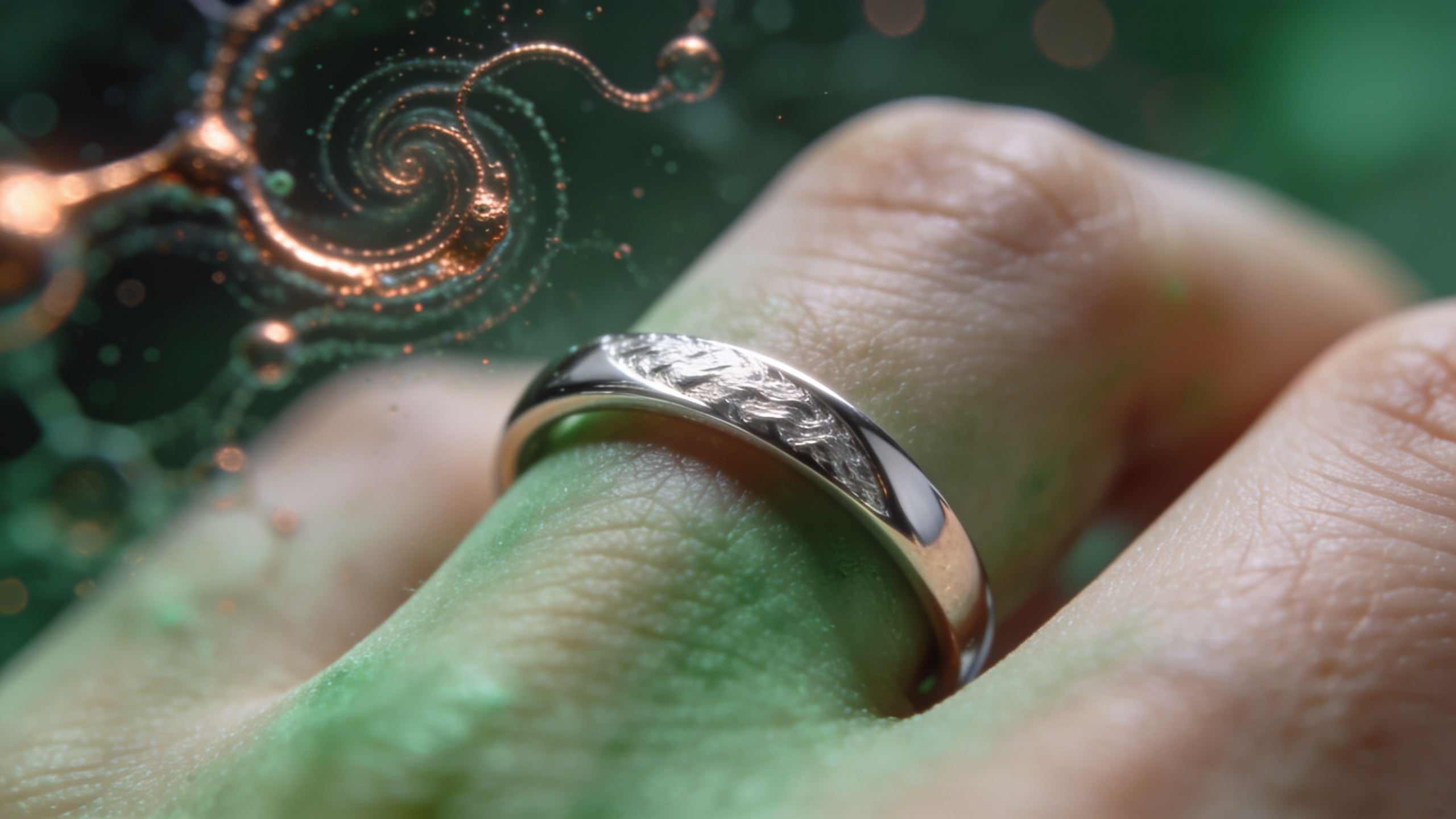
Why Does Jewellery Make My Skin Green?
You pull off a ring after a long day and find a telltale green ring around your finger. It looks alarming the first time it happens, but the cause is entirely mundane chemistry, and once you understand it, you can shop smarter and avoid the problem completely.
The Real Culprit: Copper
Green skin comes from copper. Specifically, it comes from a chemical reaction between copper and the acids, salts, and moisture present on your skin. The reaction produces copper chloride and copper salts, which are green compounds. Your skin absorbs a tiny amount of these compounds, and the color transfers directly onto the surface.
This is the same chemistry behind the green patina you see on old copper roofs and bronze statues. The Statue of Liberty is green for exactly this reason. On your skin, the effect is far more modest, but the principle is identical.
Why So Many Pieces Contain Copper
Here is where a lot of people get confused. They assume only cheap, obviously fake jewellery causes green skin. That assumption leads to disappointment when a pricier piece does the same thing.
The truth is that copper shows up in many metal alloys, including some widely respected ones.
| Metal | Copper Content | Green Skin Risk |
|---|---|---|
| Pure copper | 100% | Very high |
| Brass | 60-90% | Very high |
| Bronze | 80-95% | High |
| Gold-plated base metal | Varies (often brass base) | High once plating wears |
| 10K gold | Up to 62% | Moderate |
| 14K gold | Up to 42% | Low to moderate |
| 18K gold | Up to 25% | Low |
| Sterling silver (.925) | 7.5% | Low for most people |
| Platinum | 0% | Minimal |
Sterling silver contains a small percentage of copper because pure silver is too soft for practical jewellery. That 7.5% copper content means sterling can cause mild greening in people with highly acidic skin or in humid conditions. For the majority of wearers, though, sterling silver sits comfortably in the low-risk category.
Your Skin Chemistry Matters

Two people can wear the identical ring and have completely different results. One person gets green skin within hours. The other wears the same piece for years with zero reaction. The difference is skin chemistry.
Several factors push your skin toward a stronger reaction:
- High skin acidity (a lower natural pH)
- Profuse sweating, especially during exercise
- Frequent hand washing or exposure to cleaning products
- Hormonal fluctuations, including pregnancy and certain medications
- High sodium intake, which raises salt content in sweat
- Skincare products, lotions, and perfumes applied near the jewellery
If you tend to react to metals faster than other people, your skin likely sits on the acidic end of the spectrum. That is a fixed biological trait for the most part, so the smarter move is to adjust your jewellery choices rather than wait for your body chemistry to change.
Why Gold-Plated Pieces Are Particularly Risky
Gold-plated jewellery catches a lot of buyers off guard. The piece looks like gold, it feels like gold, and it sells at a price that feels reasonable. The problem sits underneath the surface.
Most gold-plated jewellery has a brass or copper base. The gold layer is thin, measured in microns. Daily wear removes that layer faster than most people expect, especially on rings and bracelets that contact surfaces constantly. Once the base metal is exposed, you get the full copper reaction directly against your skin.
Vermeil is a step up from standard plating. It uses sterling silver as the base rather than brass, which means even when the gold layer wears through, you have a far less reactive metal underneath. That is a detail worth asking about before you buy.
How to Stop the Green Skin Problem
The straightforward approach is to choose metals with little or no copper content. Platinum is the gold standard here, with essentially zero copper and excellent durability. The cost reflects that. For most people, the practical options fall into a more accessible range.
Solid 18K gold or higher keeps copper content low enough that reactions are rare. Titanium and niobium contain no copper at all and sit at a comfortable price point for everyday pieces. Medical-grade stainless steel (316L) is another solid performer, highly resistant to corrosion, and widely available in rings and basic jewellery.
For sterling silver specifically, rhodium plating over the top creates a barrier that slows both tarnishing and skin reactions. Many quality sterling pieces come rhodium-plated from the factory. The plating does wear over time, but it is easy to have a jeweller reapply it.
A few practical habits help too:
- Remove jewellery before swimming, showering, or washing dishes
- Apply lotions and perfumes before putting on jewellery, then let them dry fully
- Store pieces in a dry environment to slow oxidation
- Clean sterling silver regularly to remove built-up compounds
When It Goes Beyond Green: Skin Allergies
Green skin from copper is a chemical staining reaction, full stop. It washes off with soap and water, and it poses no health risk to most people.
A genuine metal allergy is a different matter. Nickel is the most common culprit, found in many lower-grade alloys. An allergic reaction produces redness, itching, swelling, or a rash, and it persists or worsens over time. If you notice those symptoms, the issue is an immune response rather than simple copper oxidation, and you need to remove the piece and switch to hypoallergenic metals permanently.
Key Takeaways
Green skin from jewellery is a copper oxidation reaction, predictable and preventable. Your individual skin chemistry determines how strong the reaction will be. Gold-plated pieces with a brass base are among the highest-risk options once the plating wears through. Solid gold above 14K, platinum, titanium, and quality sterling silver give you the most reliable results.
If you are building a jewellery collection and want pieces that stay comfortable over the long haul, put your money into solid metals with known compositions. The alloy underneath the surface matters far more than the finish on top.