What Makes Jewellery Tarnish Free
Tarnish is the enemy of beautiful jewellery. That dull, dark film that creeps over silver rings or copper bracelets ruins the look and feel of a piece within weeks. If you’ve ever wondered why some jewellery stays bright for years while other pieces go grey almost overnight, the answer comes down to chemistry, materials science, and a few smart choices in how jewellery is made and finished.
This article breaks down exactly what makes jewellery tarnish free, so you can buy smarter, care for your pieces properly, and understand what you’re actually paying for.
What Causes Tarnish in the First Place
Tarnish is a chemical reaction between metal and elements in the surrounding environment. Oxygen, sulfur compounds, moisture, and even skin acids all attack the surface of reactive metals. Silver reacts with hydrogen sulfide in the air to form silver sulfide, that familiar black coating. Copper produces a greenish patina. Brass goes dull and yellow-brown.
The speed of that reaction depends on the metal’s composition, the environment it’s exposed to, and the presence of any protective barrier on the surface. Fix those three variables and you control tarnish.
The Metals That Resist Tarnish Naturally

Some metals are chemically inert enough to resist tarnish on their own, with zero help from coatings or treatments.
Platinum sits at the top of the list. It barely reacts with anything at room temperature, which is why platinum jewellery looks the same decades after purchase. The trade-off is cost. Platinum is expensive, heavy, and not always practical for everyday pieces like tags or chains.
Gold is the more accessible option. Pure 24-karat gold resists tarnish completely, because gold simply does not oxidise at normal temperatures. The problem is that pure gold is too soft for most jewellery. Lower karats, like 10k or 14k, include copper, silver, or zinc to add hardness, and those added metals are the ones that tarnish. The lower the karat, the more reactive the alloy.
Stainless steel is the workhorse of tarnish-free jewellery. It contains chromium, which forms a thin, stable oxide layer on the surface that self-repairs if scratched. Grade 316L surgical stainless steel is the best option for jewellery contact with skin.
Titanium behaves similarly to stainless steel, forming a passive oxide layer that locks out moisture and air.
How Alloy Composition Changes Everything
The metal itself tells only part of the story. Alloy composition matters enormously. Sterling silver, for example, is 92.5% silver and 7.5% other metals, usually copper. That copper is what makes sterling silver susceptible to tarnish. The silver content resists, the copper reacts, and over time the surface darkens.
Some manufacturers now produce argentium silver, which replaces most of the copper with germanium. Germanium forms a stable oxide layer on the surface, much like chromium does in stainless steel. The result is a silver alloy that resists tarnish far longer than standard sterling.
The lesson here is clear. Two pieces that look identical can behave completely differently based on what’s in the alloy, not just what metal is named on the label.
Protective Coatings and Platings
When the base metal is reactive, a coating can extend its life considerably. This is where the market gets complicated, because coatings vary widely in quality and durability.
| Coating Type | Thickness | Durability | Best Use Case |
|---|---|---|---|
| Rhodium plating | 0.1 to 1 micron | 1 to 3 years with daily wear | Silver rings, white gold |
| Gold plating | 0.5 to 2.5 microns | 6 to 24 months | Fashion jewellery |
| Gold vermeil | 2.5+ microns over sterling | 2 to 5 years | Mid-range jewellery |
| PVD coating | 2 to 5 microns | 5 to 10 years | Stainless steel pieces |
| E-coating (epoxy) | Varies | 2 to 4 years | Budget fashion pieces |
Rhodium plating is the standard for sterling silver in the fine jewellery market. Rhodium is a platinum-group metal that resists tarnish and scratching. A well-applied rhodium plate on sterling silver will stay bright for years under normal conditions.
Physical Vapor Deposition, or PVD, is the coating technology worth knowing. It bonds a thin layer of metal to the surface at a molecular level under vacuum conditions. PVD coatings are far more durable than electroplating and hold up to sweat, water, and daily friction far better than most alternatives.
The Role of Design and Finishing
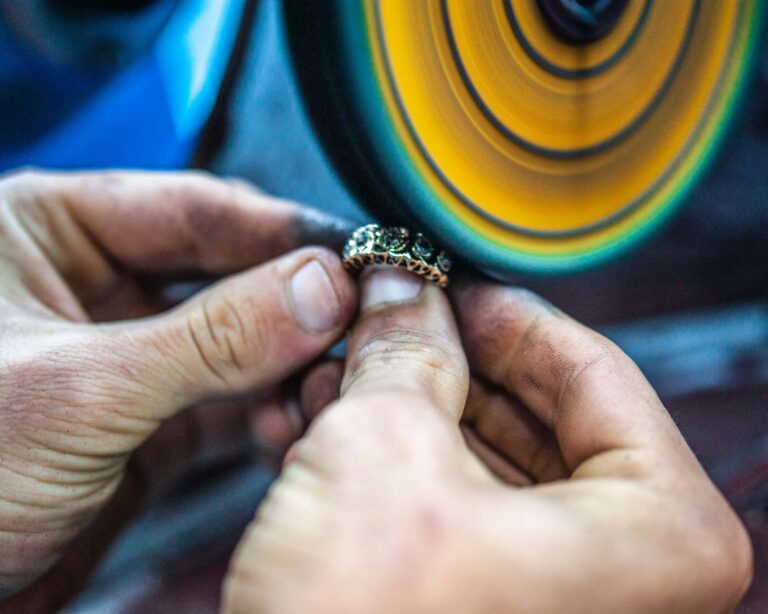
How a piece is finished affects how quickly it tarnishes in practice. Polished surfaces tarnish faster than brushed or matte finishes because polishing removes micro-scratches but creates a surface that sits in direct, even contact with air and moisture.
Pieces with deep grooves, engravings, or porous textures trap moisture and skin residue, which accelerates oxidation in those areas. Clean design with smooth transitions holds up better over time.
Sealed clasps, closed-back settings, and solid construction reduce the internal surfaces where moisture can pool. These details matter more than most buyers realise.
What “Tarnish Free” Actually Means on a Label
Here’s the honest version. No metal is permanently immune to every condition. “Tarnish free” on a label typically means the piece will resist tarnish under normal wearing conditions for a defined period. The key factors to ask about are:
- Base metal composition and any reactive alloys present
- Coating type and thickness in microns
- Whether the coating is reapplicable if it wears off
- The manufacturer’s recommended care routine
Good manufacturers are transparent about these details. Vague language like “gold tone” or “silver colored” almost always means a thin plating over a base metal with a short lifespan.
Key Takeaways
Tarnish resistance comes from three sources working together. The base metal must be inherently stable, the alloy composition must limit reactive elements, and any protective coating must be thick and well-bonded enough to last.
For everyday jewellery that sees real wear, stainless steel with a PVD coating is my top recommendation for long-term tarnish resistance at a reasonable price point. For silver pieces specifically, argentium silver or rhodium-plated sterling are the right calls. Platinum and high-karat gold solve the problem completely if budget allows.
If you’re buying jewellery to last, read the spec sheet, ask about the coating thickness, and pay attention to the alloy, not just the name on the tag. That’s how you get a piece that stays bright for years instead of weeks.