How Does Jewellery Make You Feel?
There is a reason you reach for the same necklace every morning before a big meeting, or slip on a bracelet your mother gave you when you need a quiet boost of confidence. Jewellery does something to us. It shifts our mood, anchors our identity, and carries emotional weight that far outpaces its physical size. Understanding why can help you choose pieces with more intention and get far more from the ones you already own.
The Psychology Behind Wearing Jewellery
Researchers call it “enclothed cognition,” the idea that what we wear physically changes how we think and behave. Jewellery fits squarely into that framework. When you put on a piece that you associate with strength, success, or love, your brain registers the symbolic meaning and your body responds accordingly.
A 2012 study at Northwestern University found that wearing a white lab coat improved attention and focus because of what the coat represented. The same principle applies to a ring worn in memory of someone, a medal earned through effort, or a dog tag engraved with a name that matters to you. The object becomes a trigger for a specific mental state.
This is psychology at the most practical level. Your jewellery is a wearable cue.
Emotional Responses People Report Most Often
Ask anyone why they wear a particular piece and the answers cluster into a few clear categories. Below is a breakdown of the most common emotional responses and what tends to drive them.
| Emotional Response | Common Trigger |
|---|---|
| Confidence | Bold statement pieces, metals with weight and presence |
| Comfort | Heirloom items, gifted jewellery from loved ones |
| Grief and connection | Memorial pieces, engraved tags, portrait lockets |
| Identity and belonging | Symbolic designs, cultural or religious jewellery |
| Joy and playfulness | Colorful stones, unusual shapes, layered pieces |
| Calm and grounding | Familiar everyday pieces worn as a ritual |
Each of these responses is real and worth taking seriously. Jewellery is one of the few objects we carry on our bodies all day, and that proximity matters.
How Jewellery Reinforces Identity
The pieces you choose to wear tell a story about who you are, or who you want to be. This is especially true of personalized jewellery. An engraved dog tag, for example, carries specific language, a name, a date, a phrase, and every time you touch it, that language does its work on you.
I have spoken to people who wear engraved sterling silver tags bearing the names of pets they have lost, children born early, or parents who have passed. They describe the feeling as “carrying someone with you.” That is precise and accurate. The object makes an abstract emotional connection into something physical and immediate.
Beyond memorial pieces, jewellery reinforces identity in daily, low-stakes ways too.
- A minimalist who wears a single thin band is communicating restraint and precision.
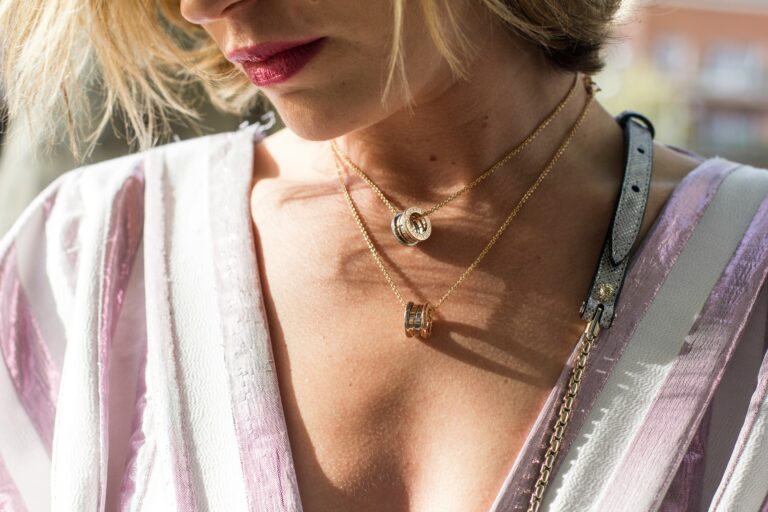
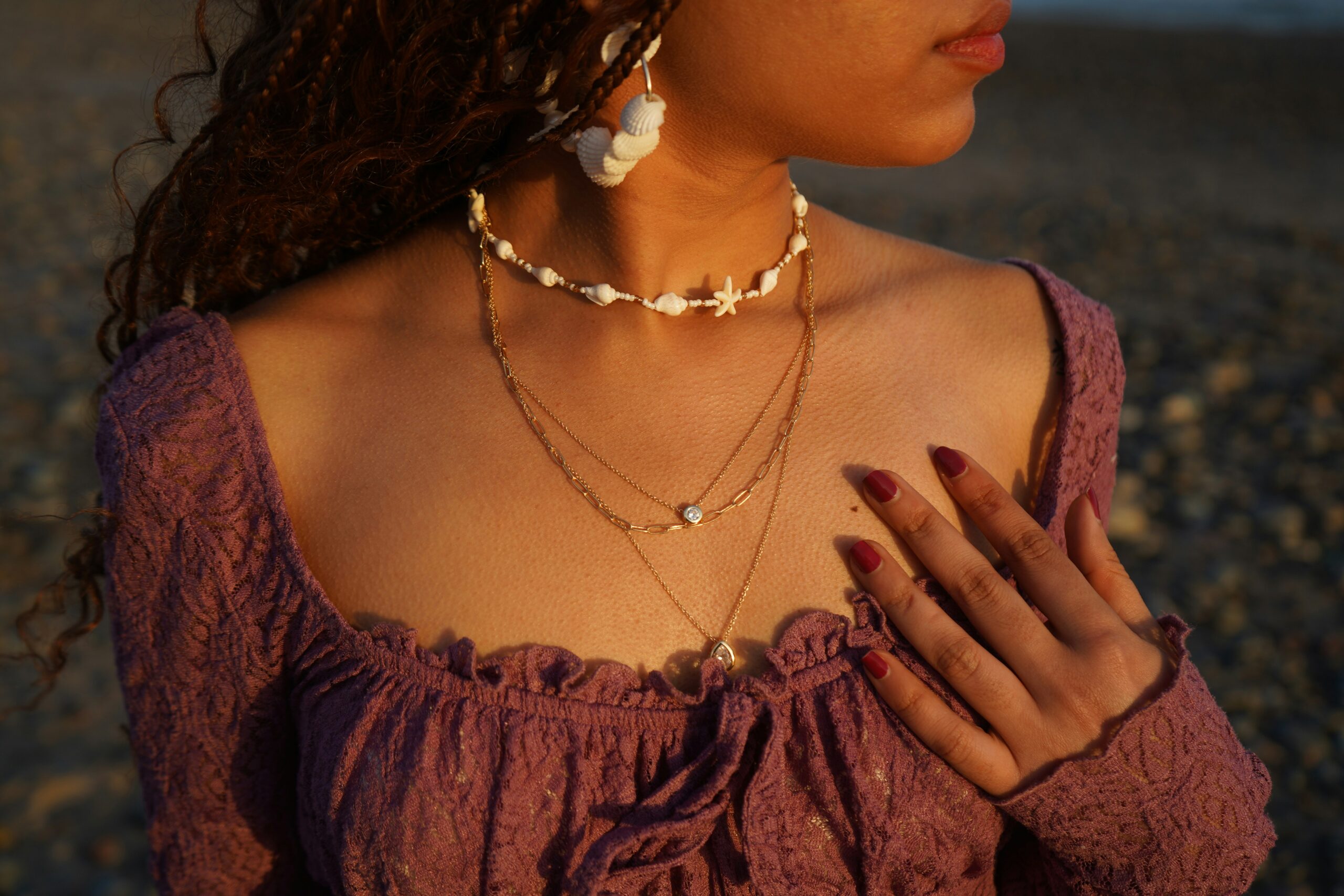
- Someone who layers five chains is communicating warmth, abundance, and creativity.
- A person who wears a cuff engraved with a personal motto is reminding themselves of a value they hold.
- Someone who keeps a piece hidden under clothing is holding something private and sacred.
None of these are conscious performances for an audience. They are negotiations between you and yourself.
The Physical Sensation Matters Too
There is a tactile dimension to this that gets overlooked. The weight of a sterling silver tag against your chest, the cool metal of a ring on your finger, the subtle drag of a bracelet on your wrist. These sensations are repetitive and grounding, almost like a form of low-level proprioception.
People who experience anxiety often describe fidgeting with a ring or necklace as calming. The repetitive physical contact gives the nervous system something to anchor to. This is close to how worry beads function in Mediterranean and Middle Eastern traditions, a technology humans developed across cultures because the body responds to rhythmic tactile input.
When you buy jewellery, pay attention to how it feels to wear, not just how it looks. A piece you love visually but find uncomfortable to wear will sit in a drawer within a week.
Why Meaningful Jewellery Outlasts Fashion
Fast fashion jewellery gives you a short burst of novelty and then fades. A piece with genuine personal meaning does the opposite. It grows on you. The longer you wear it, the more associations it accumulates, and the stronger the emotional response becomes.
This is why quality materials matter beyond aesthetics. Sterling silver, gold, and stainless steel age well. They develop a patina that marks the passage of time. A sterling silver dog tag worn daily for ten years looks different than the day you bought it, and that difference is meaningful. It holds evidence of your life.
Cheaply made pieces corrode, break, or lose their finish. When that happens, the emotional object is gone. The investment in a durable material is also an investment in the feeling you are building around that piece.
Making More Intentional Choices
If you want jewellery to work harder for you emotionally, the approach is straightforward.
Choose pieces for what they mean, not just what they cost. A simple engraved tag in sterling silver will do more for your daily mental state than a flashy piece with zero personal resonance.
Pay attention to how you feel when you put it on and take it off. That transition moment reveals what the piece is actually doing for you. If removing it feels like a small loss, you have found a piece that matters.
Give jewellery as a deliberate emotional gift. A piece chosen with a specific feeling in mind, comfort, pride, remembrance, communicates care in a way that a generic gift card simply cannot match.
Key Takeaways
Jewellery changes how you feel because it changes how you think about yourself. The psychological mechanism is well-documented, the emotional effects are personal and accumulative, and the physical sensation adds a layer of grounding that clothing alone cannot provide.
Choose pieces with intention. Prioritize meaning over trend. Invest in materials that last. And if a piece makes you feel like yourself the moment you put it on, that is the one worth keeping.