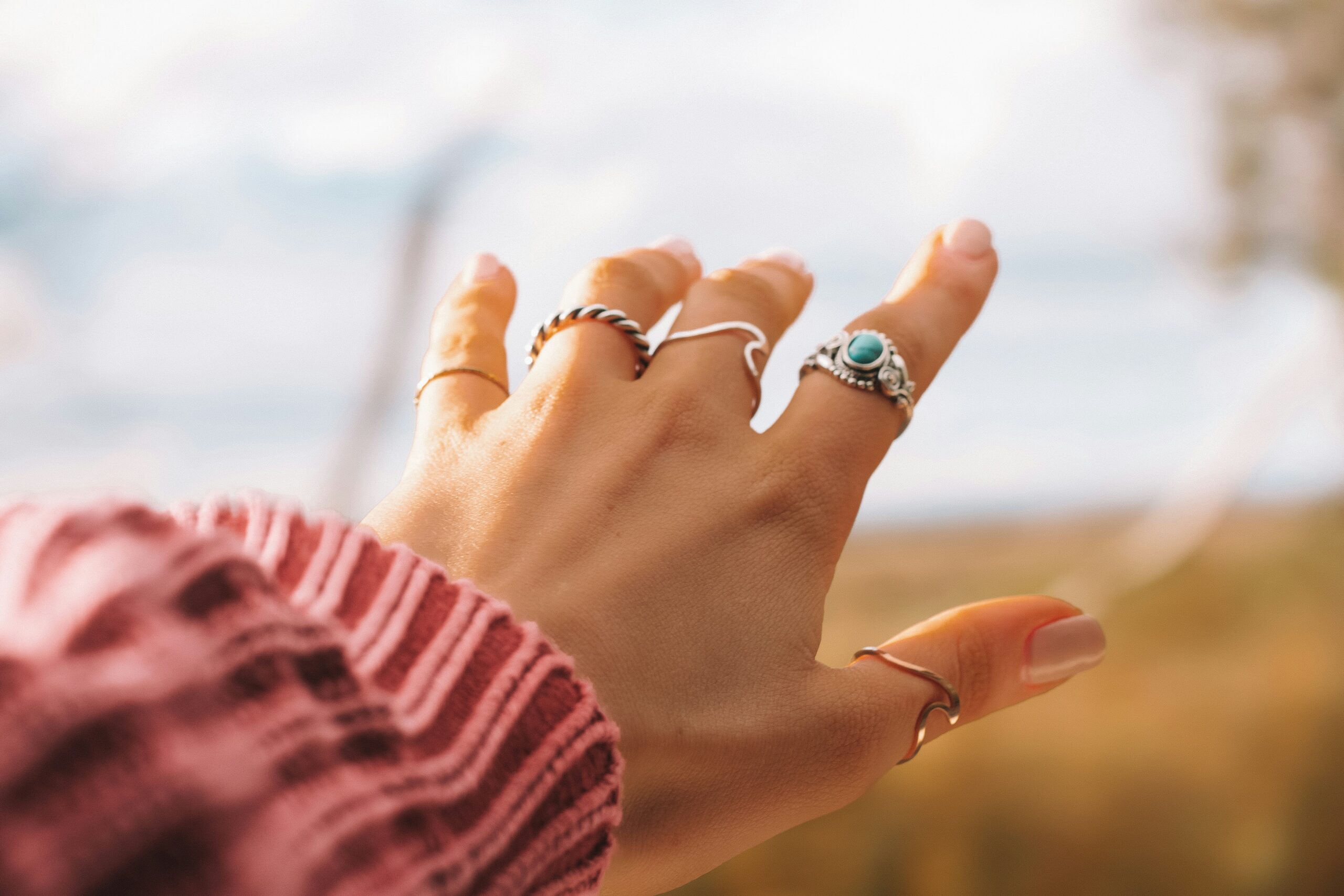
How to Measure Your Ring Size at Home Accurately
Getting a ring that fits perfectly matters more than most people think. Too tight and it cuts off circulation. Too loose and you risk losing it on a cold day when your fingers shrink. If you’re ordering a custom piece online, like a personalized sterling silver tag ring or an engraved memorial band, there’s no second chance to size it in a store. You measure right the first time, or you deal with a costly resize later.
The good news is that measuring your ring size at home is straightforward if you know which method to use and what pitfalls to avoid. I’ve been through this process enough times to know where people go wrong, and this guide covers everything you need to get it right on the first attempt.
Why Ring Size Varies More Than You’d Expect
Most people assume their ring size is fixed. It’s a number you look up once and use forever. That assumption causes problems.
Finger size changes throughout the day and across seasons. Fingers swell in heat and contract in cold. They swell after exercise, after salty food, and in the morning from overnight fluid retention. The “true” size of your finger is best captured mid-afternoon, when your body temperature is stable and any morning swelling has settled.
Temperature matters too. If your hands are cold, measure after warming them up. A reading taken from cold fingers will run small and produce a ring that feels uncomfortably tight on a warm summer day.
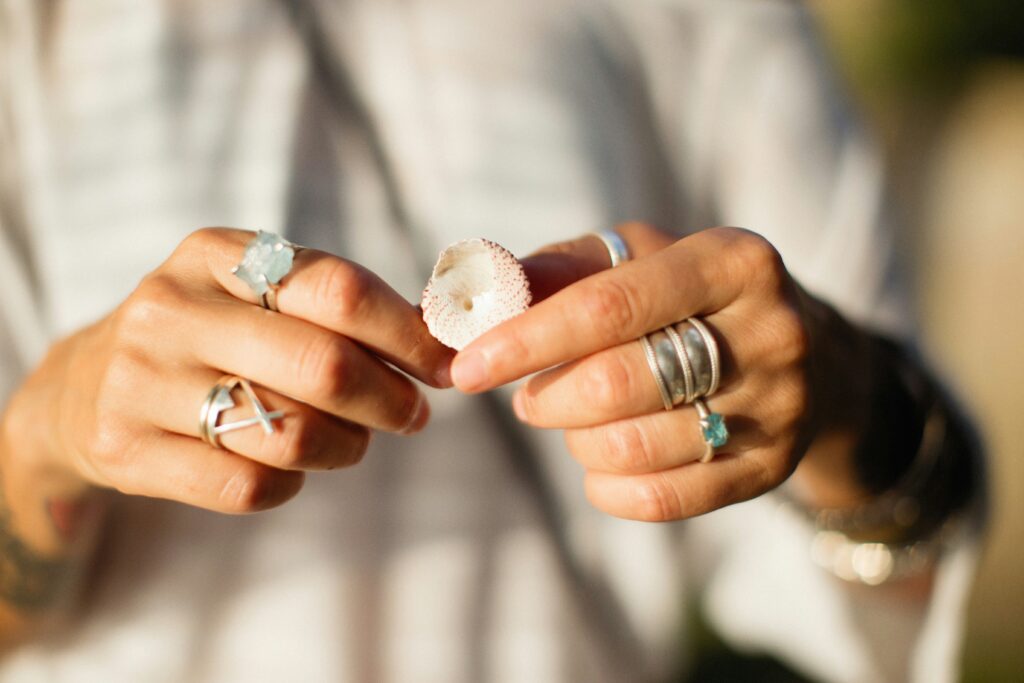
The String or Paper Strip Method
This is the most accessible method and the one I recommend as your starting point.
What You Need
- A thin strip of paper or a piece of non-stretchy string about 6 inches long
- A pen or fine marker
- A ruler (millimeters work best for accuracy)
How to Do It
Wrap the paper strip or string around the base of the finger you want to measure. Wrap it snugly but leave it loose enough that you can still slide it off your knuckle. Mark the point where the strip overlaps itself, then lay it flat against the ruler. That measurement in millimeters is your finger’s circumference.
Use the table below to convert that circumference into a US ring size.
| Circumference (mm) | US Ring Size |
|---|---|
| 44.2 | 3 |
| 46.8 | 4 |
| 49.3 | 5 |
| 51.9 | 6 |
| 54.4 | 7 |
| 57.0 | 8 |
| 59.5 | 9 |
| 62.1 | 10 |
| 64.6 | 11 |
| 67.2 | 12 |
If your measurement falls between two sizes, always go up. A ring that slides on with slight resistance is more comfortable than one you need lotion to remove.
The Existing Ring Method
If you already own a ring that fits a specific finger perfectly, this method skips the wrapping step entirely.
Lay the ring flat on a ruler and measure the inside diameter, the distance across the hollow circle, in millimeters. Then use a diameter-to-size chart to find your US size. A 17.3mm interior diameter corresponds to a size 7, for example. Most jewelers publish these charts, and they’re consistent across the industry.
This method works well for gifts. If someone wears a ring on their right ring finger and you want to buy something for their left ring finger, the sizing will typically differ by half a size, with the left running slightly larger for most right-handed people.
Common Mistakes That Throw Off Your Measurement
People make the same errors repeatedly. Here’s what to watch for.
- Measuring first thing in the morning. Fingers are at their largest then, and a ring sized to that measurement will feel loose by afternoon.
- Using a stretchy string or thick yarn. Both compress and give false readings. Use non-stretch thread or a narrow paper strip.
- Measuring only once. Take three measurements across the same session and average them. Slight inconsistencies in how you wrap the strip produce a one-size margin of error.
- Ignoring knuckle size. If your knuckle is significantly wider than your finger base, size to the knuckle so the ring actually fits over it, then ask about comfort-fit bands that taper slightly inside to stay snug at the base.
- Rounding down. People want snug rings and instinctively round to the smaller number. Round up. It’s easier to add a small sizing bead than to stretch metal.
Wide Bands Require a Different Approach
Standard ring sizing charts assume a narrow band, roughly 2 to 4mm wide. Wide bands, anything 6mm or above, fit tighter because they cover more surface area on the finger. A band that’s 10mm wide will feel considerably tighter than a standard 2mm band at the exact same size.
The rule of thumb I use: go up half a size for every 2mm of additional width beyond 4mm. So if your standard size is a 7 and you’re ordering a 10mm band, start at a 7.5 or 8. When in doubt, contact the jeweler directly and tell them the exact width of the piece. Any reputable maker will guide you.
Key Takeaways
Accurate home ring sizing comes down to timing, method, and common sense. Measure mid-afternoon on a day of normal activity. Use a non-stretch paper strip and a millimeter ruler. Measure three times and use the most consistent result. If you land between sizes, go up. Account for wide bands by sizing up accordingly.
Take five minutes to do this properly before placing any custom order. A well-fitted ring is comfortable all day, stays where you put it, and looks exactly as it should. A poorly fitted ring is a problem from the moment you slide it on.
If you’re ordering a custom sterling silver piece and have any uncertainty after measuring, reach out to the shop before you order. A quick conversation saves a lot of hassle.